
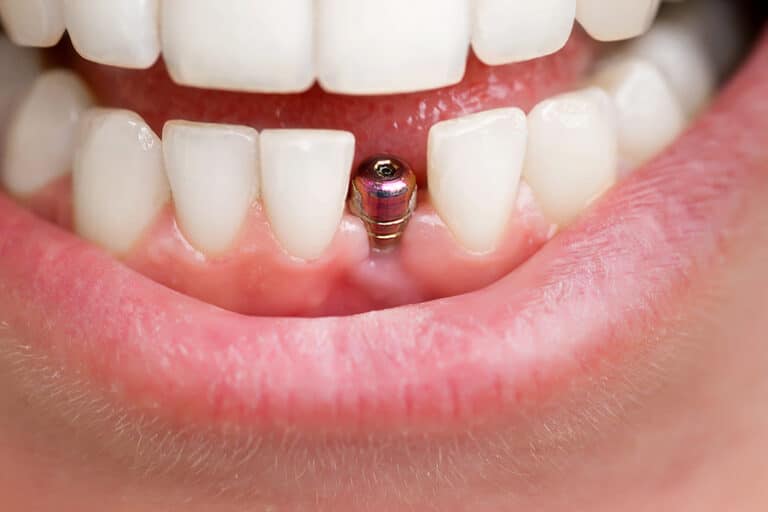
Dental implants replace missing tooth roots, and they support crowns, bridges, or dentures. Since they anchor below the gums, implants affect how your mouth handles pressure, movement, and sound. This matters to adults who want clear details about eating and speech after tooth loss. Here is more information on the impact of dental implants on speech and eating:
Restored Biting Force
When teeth are missing, chewing patterns may shift, and the jaw works unevenly. This changes how food breaks down. Since implants support replacement teeth at the gumline, they help direct force into the jaw during biting. That setup creates a more stable chewing surface.
You may notice changes in how you bite into firm foods, and the difference is mechanical. Apples, meats, and raw vegetables need steady pressure. Since an implant does not rest on soft tissue, it reduces the sliding motion seen with some removable options. A clinician checks several factors during planning, and bite alignment ranks high on that list.
Improved Digestion
Digestion starts in the mouth, and chewing affects every step after that. Food needs to be broken into smaller pieces. When chewing stays uneven, larger pieces reach the stomach while saliva mixes less fully with food.
Dental implants help restore a firmer chewing surface, and that may support more complete food breakdown. The stomach still does the main digestive work. As the mouth begins that process, better grinding may reduce the strain caused by poorly chewed food.
You may want to track a few eating changes after treatment:
- How evenly you chew on both sides
- Whether tough foods need less repositioning
- Whether meals take less effort
Clearer Pronunciation
Speech depends on airflow, tongue placement, and tooth position, so missing teeth may change pronunciation. Sounds like “s,” “f,” and “th” may be affected. Since the tongue and lips rely on fixed points, even one missing front tooth may alter speech patterns.
Some people adapt quickly, and others develop workarounds that sound less clear. Removable appliances may shift during speech. If a replacement tooth stays fixed in place, the mouth has a steadier surface for forming consonants.
You might notice speech issues in a few areas:
- Whistling on “s” sounds
- Leaking air on “f” sounds
- Slurring during fast speech
Permanent Stability
Implants stay in the jaw, and that fixed position changes how the mouth functions day to day. Movement may be limited. Since stability affects both chewing and speech, this feature connects the other effects discussed above.
A removable denture may lift during meals, and it may also shift while speaking. That movement changes pressure points. When an implant-supported tooth remains fixed, the tongue and cheeks work around a surface that stays in place.
Long-term stability also shapes daily habits, and routine use becomes more predictable. Cleaning is helpful to make them last. While the implant does not move like a denture, the surrounding gums and bone need regular care and dental follow-up.
Get Dental Implants Today
Dental implants change how the mouth handles force, and they also affect sound production; they support chewing. Since eating and speech depend on tooth position and stability, implants play a direct role in both functions. If you want to learn what applies to your mouth, schedule a dental evaluation today.