
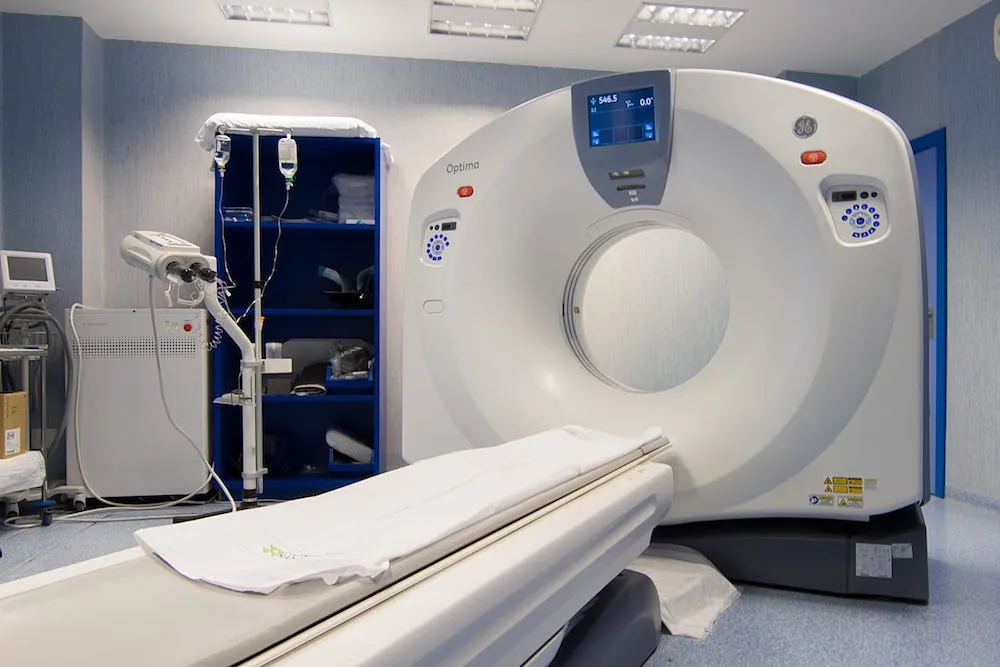
A CT scan is one of the most common tools doctors use to look inside the body. These scans can detect cancer and help doctors monitor changes over time. In cancer care, timely and accurate imaging can support diagnoses, treatment planning, and more informed decisions at every stage of care.
How Do CT Scans Work
A CT scanner takes X-ray pictures from many angles around the body. A computer then combines those pictures into thin, layered images called slices. Each slice shows a cross-section of the area being studied, allowing doctors to view organs, bones, and soft tissues separately. Sometimes doctors use contrast dye to make certain areas show up more clearly. Patients receive the dye through a vein, by mouth, or both, depending on the part of the body being scanned.
This layered approach sets a CT scan apart from a regular X-ray. A standard X-ray produces a single flat image. A CT scan provides many detailed views, making small changes easier to spot.
How Can They Detect and Monitor Cancer
CT scans can reveal a growth that may be a tumor. They show the size and location, which helps doctors decide on next steps. Then they can compare new scans with older ones. Comparisons help doctors see whether a tumor has shrunk, grown, remained the same, or spread. This information helps your care team plan treatment and adjust it when needed.
What Should I Expect from a Scan
Before the scan, you may be asked to avoid eating or drinking for a few hours, especially if contrast dye is used. Tell the staff about any allergies, medications, or possible pregnancy. Wear comfortable clothing and remove jewelry and other metal items.
During the scan, you will lie on a table that slides into a large, ring-shaped machine. The machine does not fully enclose you, so most people do not feel closed in. You will need to stay still, and you may be asked to hold your breath for a few seconds at certain times throughout the imaging. If you receive contrast dye, you might feel warm or notice a metallic taste, which passes quickly.
After the scan, you can usually return to your normal day right away. Drink plenty of water if you were given contrast dye, as this helps clear it from your body. A radiologist will review the images and send a report to your doctor, who will share the results with you.
When Should I Talk to My Doctor
Talk to your doctor if you have unexplained symptoms that do not go away, such as pain, lumps, or weight loss. These signs do not always mean cancer, but they are worth checking. Ask your doctor whether a CT scan is right for your situation, especially if you have a family history of cancer or known risk factors. If you are already in treatment, ask how often you should be scanned to track your progress. Your doctor can explain what each result means and guide your next steps.