A bright, white smile is something many people dream of. Over time, our teeth can become stained or discolored due to food, drinks, smoking, aging, or poor oral hygiene. This is where teeth whitening treatments come in. They are one of the most popular cosmetic dental procedures today because they can quickly improve the appearance of your smile.
In this article, we will explain everything you need to know about teeth whitening treatment, including the procedure, cost, types, benefits, risks, and aftercare. This guide is written in a simple and human-friendly way so anyone can understand it.
What is Teeth Whitening?
Teeth whitening is a cosmetic dental treatment that helps remove stains and discoloration from teeth. It makes your teeth look cleaner, brighter, and more attractive. The process usually involves using bleaching agents like hydrogen peroxide or carbamide peroxide.
These chemicals break down stains into smaller pieces, making the color less concentrated and your teeth look whiter.
Why Do Teeth Become Yellow?
Before understanding the treatment, it’s important to know why teeth lose their whiteness. Some common reasons include:
- Drinking tea, coffee, or soft drinks
- Smoking or tobacco use
- Poor oral hygiene
- Aging (enamel wears down over time)
- Certain medications
- Genetics
Even if you brush regularly, some stains go deep into the enamel and need professional treatment.
Types of Teeth Whitening Treatments
There are mainly three types of teeth whitening methods:
1. In-Office Professional Whitening
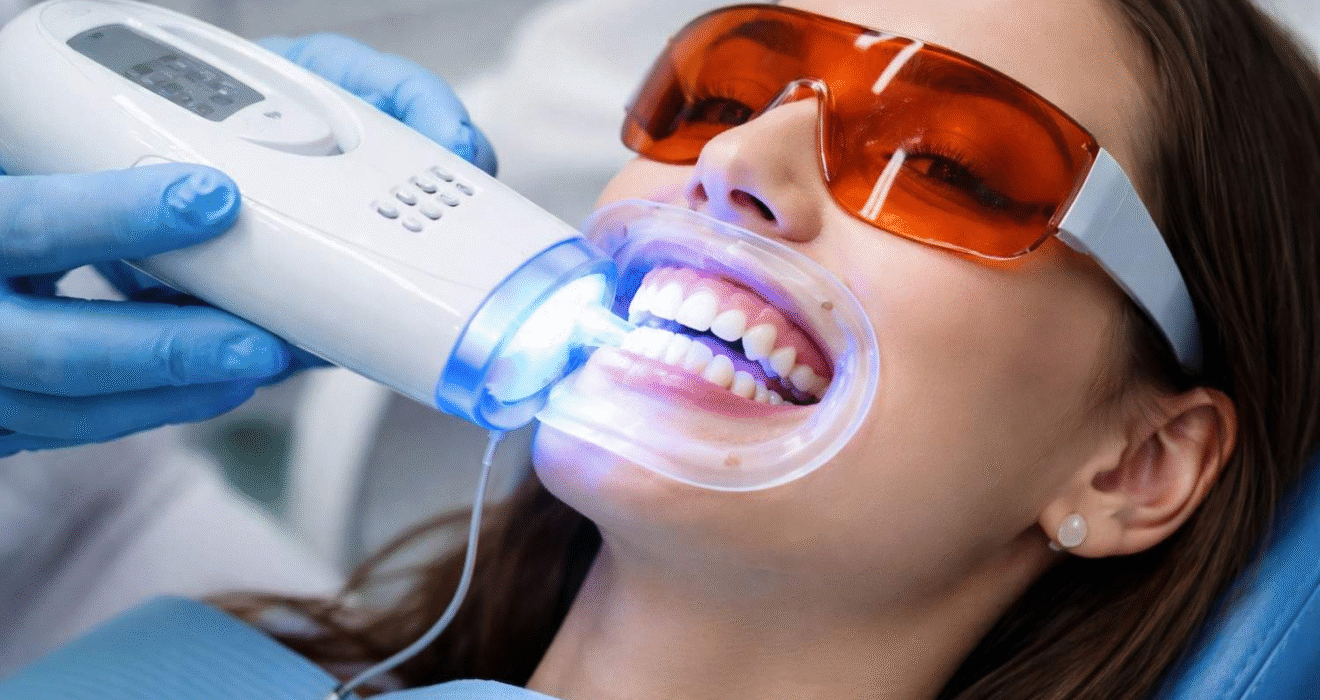
This is done by a dentist in a clinic. It is the fastest and most effective method.
- A strong whitening gel is applied to your teeth
- A special light or laser may be used to activate the gel
- The procedure usually takes 60–90 minutes
Best for: People who want quick and visible results.
2. At-Home Whitening Kits from Dentist
Dentists also provide customized whitening kits for home use.
- Custom trays are made to fit your teeth
- You apply a whitening gel and wear the tray for a few hours daily
- Results appear in 1–2 weeks
Best for: People who prefer gradual whitening.
3. Over-the-Counter Products
These include whitening toothpaste, strips, and gels available in stores.
- Easy to use
- Less expensive
- Results take longer and may be less noticeable
Best for: Mild stains and maintenance.
Step-by-Step Teeth Whitening Procedure
Let’s understand the professional in-office whitening process in simple steps:
Step 1: Consultation
The dentist checks your teeth and gums to ensure you are a good candidate for whitening. If you have cavities or gum disease, those issues must be treated first.
Step 2: Cleaning
Your teeth are cleaned to remove plaque and surface stains. This helps the whitening agent work better.
Step 3: Protection
Your gums and lips are covered with a protective barrier to avoid irritation from the whitening gel.
Step 4: Application of Whitening Gel
The dentist applies a bleaching gel to your teeth.
Step 5: Activation
A special light or laser may be used to activate the gel. This speeds up the whitening process.
Step 6: Rinse and Repeat
The gel may be applied 2–3 times in one session, depending on the desired results.
Step 7: Final Result
After the procedure, your teeth will appear several shades whiter.
Teeth Whitening Cost
The cost of teeth whitening depends on the type of treatment, location, and dentist’s experience.
1. Professional In-Office Whitening
- Cost: $200 to $1000 (or equivalent in local currency)
- Most expensive but gives instant results
2. Dentist-Supervised Home Kits
- Cost: $100 to $400
- Moderate cost with good results
3. Over-the-Counter Products
- Cost: $10 to $100
- Cheapest option but slower results
Cost in Pakistan (Approximate)
- In-office whitening: PKR 15,000 to PKR 50,000
- Home kits: PKR 5,000 to PKR 15,000
- Store products: PKR 1,000 to PKR 5,000
Prices may vary depending on the clinic and city.
Benefits of Teeth Whitening
Teeth whitening offers many advantages:
- Improves your smile and appearance
- Boosts confidence and self-esteem
- Quick and painless procedure
- Safe when done by professionals
- Removes years of stains
Many people feel more comfortable smiling after whitening.
Risks and Side Effects
Although teeth whitening is generally safe, some people may experience:
1. Tooth Sensitivity
You may feel sensitivity to hot or cold foods after treatment. This usually goes away in a few days.
2. Gum Irritation
If the whitening gel touches your gums, it may cause mild irritation.
3. Uneven Results
Fillings, crowns, or veneers do not whiten like natural teeth, which can cause uneven color.
4. Temporary Results
Whitening is not permanent. Teeth can become stained again over time.
How Long Do Results Last?
Teeth whitening results can last from 6 months to 2 years, depending on your habits.
To maintain results:
- Avoid coffee, tea, and smoking
- Brush and floss regularly
- Use a straw for colored drinks
- Visit your dentist regularly
Who Should Avoid Teeth Whitening?
Teeth whitening may not be suitable for:
- Pregnant or breastfeeding women
- Children under 16
- People with gum disease or cavities
- Those with very sensitive teeth
- People with dental restorations on front teeth
Always consult a dentist before starting treatment.
Tips for Better Results
To get the best results from whitening:
- Get a professional cleaning first
- Follow your dentist’s instructions carefully
- Avoid staining foods after treatment
- Use whitening toothpaste for maintenance
- Do not overuse whitening products
Natural Teeth Whitening Methods (Optional)
Some people try natural methods, such as:
- Baking soda
- Activated charcoal
- Oil pulling
However, these methods are less effective and may damage enamel if overused. Always be careful and consult a dentist.
Conclusion
Teeth whitening is a simple and effective way to improve your smile. Whether you choose professional treatment or home products, there are options available for every budget.
Professional whitening gives the fastest and most noticeable results, while home kits and store products offer more affordable alternatives. Understanding the procedure and cost helps you make the right decision.
A bright smile not only improves your appearance but also boosts your confidence. With proper care and maintenance, you can enjoy long-lasting results.
FAQs
1. Is teeth whitening safe?
Yes, teeth whitening is safe when done by a qualified dentist or when using approved products. However, overuse can damage enamel.
2. Does teeth whitening hurt?
Most people do not feel pain, but some may experience temporary sensitivity after the procedure.
3. How long does the whitening procedure take?
In-office whitening usually takes about 60 to 90 minutes. Home treatments may take 1 to 2 weeks.
4. Can yellow teeth become white again?
Yes, most yellow stains can be removed with proper whitening treatment, especially professional procedures.
5. How often can I whiten my teeth?
It is recommended to wait at least 6 months to 1 year between whitening treatments, depending on your dentist’s advice.