
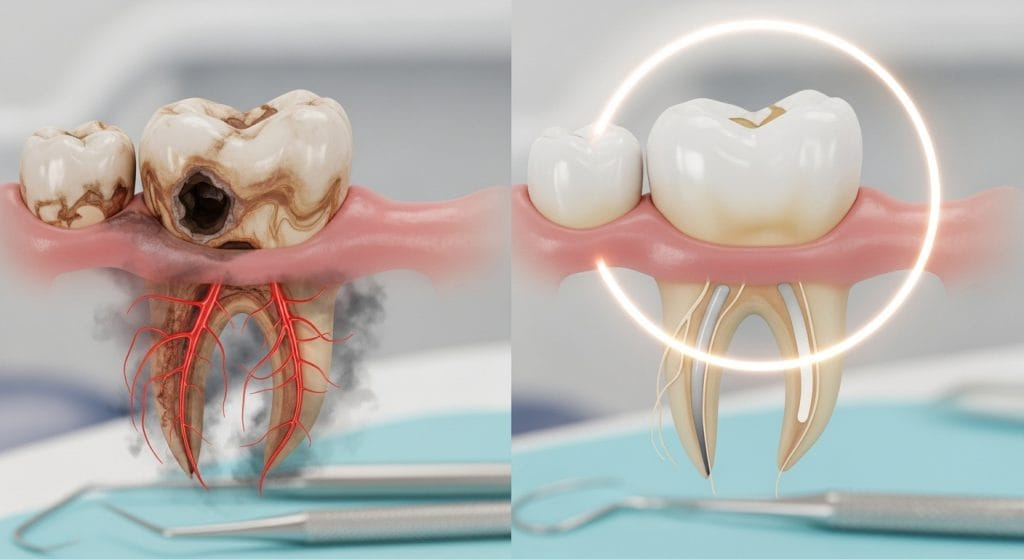
When you hear the words “root canal,” it’s normal to feel nervous. Many people associate this treatment with pain or discomfort, but the truth is very different. With modern dental care, a root canal is a safe, effective, and often pain-relieving procedure. The most important factor in having a smooth and successful experience is choosing the best dentist for root canal treatment.
In this article, we’ll explain everything in simple and easy language—what a root canal is, why you might need one, how to choose the right dentist, and what to expect before and after the procedure.
What Is a Root Canal Treatment?
A root canal is a dental procedure used to treat infection inside a tooth. Each tooth has a soft inner part called the pulp, which contains nerves and blood vessels. When this pulp becomes infected due to decay, cracks, or injury, it can cause severe pain and swelling.
During a root canal treatment, the dentist:
- Removes the infected pulp
- Cleans and disinfects the inside of the tooth
- Fills and seals the tooth to prevent further infection
This treatment helps save your natural tooth instead of removing it.
Why Do You Need a Root Canal?
You may need a root canal if you experience:
- Severe tooth pain, especially when chewing
- Sensitivity to hot or cold that lasts long
- Swollen or tender gums
- Darkening of the tooth
- A small bump (abscess) on the gums
Ignoring these signs can lead to more serious problems, including spreading infection and tooth loss.
Importance of Choosing the Best Dentist
Not all dentists are the same, especially when it comes to root canal treatment. Choosing the best dentist can make a big difference in your comfort, recovery, and long-term results.
A skilled dentist will:
- Diagnose the problem accurately
- Use modern tools and techniques
- Make the procedure as painless as possible
- Ensure the tooth is fully cleaned and sealed
- Reduce the risk of complications
Qualities of the Best Dentist for Root Canal Treatment
1. Experience and Expertise
Look for a dentist who has strong experience in performing root canals. Some dentists specialize in this area and are known for handling complex cases.
2. Use of Modern Technology
Advanced equipment like digital X-rays, rotary tools, and microscopes helps improve accuracy and reduce treatment time.
3. Good Communication
The best dentist will explain the procedure clearly, answer your questions, and make you feel comfortable.
4. Positive Patient Reviews
Check online reviews or ask friends and family for recommendations. Good feedback from patients is a strong sign of quality care.
5. Focus on Comfort
A good dentist understands your fear and takes steps to make the process pain-free, such as using proper anesthesia and gentle techniques.
What Happens During the Procedure?
Understanding the process can help reduce anxiety.
Step 1: Examination
The dentist examines your tooth and may take X-rays to see the extent of infection.
Step 2: Numbing the Area
Local anesthesia is used to numb the tooth and surrounding area, so you don’t feel pain.
Step 3: Cleaning the Tooth
The dentist makes a small opening in the tooth and removes the infected pulp.
Step 4: Shaping and Filling
The inside of the tooth is cleaned, shaped, and filled with a special material.
Step 5: Sealing the Tooth
Finally, the tooth is sealed, and in many cases, a crown is placed to protect it.
Is Root Canal Painful?
This is one of the biggest concerns people have. The truth is, modern root canal treatment is not painful. In fact, it relieves the pain caused by infection.
You might feel slight discomfort after the procedure, but it usually goes away within a few days and can be managed with simple medication.
Benefits of Root Canal Treatment
Choosing the best dentist ensures you get the full benefits of the procedure:
- Saves your natural tooth
- Restores normal chewing and biting
- Prevents infection from spreading
- Improves oral health
- Maintains your natural smile
How to Find the Best Dentist Near You
Here are some simple tips:
- Search online using the keyword “best dentist for root canal treatment”
- Read patient reviews carefully
- Visit the clinic to check cleanliness and staff behavior
- Ask about the dentist’s experience and tools used
- Compare costs and services
Taking time to research can help you make the right choice.
Cost of Root Canal Treatment
The cost can vary depending on:
- The location of the clinic
- The experience of the dentist
- The complexity of the case
- Whether a crown is needed
While it may seem expensive, saving your natural tooth is often more cost-effective than extraction and replacement.
Aftercare Tips
After your root canal, follow these simple steps:
- Avoid chewing on the treated tooth for a few days
- Maintain good oral hygiene (brush and floss daily)
- Take prescribed medications as directed
- Visit your dentist for follow-up appointments
Proper care ensures long-lasting results.
Common Myths About Root Canals
Myth 1: Root Canals Are Very Painful
Reality: They relieve pain, not cause it.
Myth 2: Tooth Extraction Is Better
Reality: Saving your natural tooth is always the best option.
Myth 3: The Procedure Takes Many Visits
Reality: Many root canals are completed in one or two visits.
Final Thoughts
Choosing the best dentist for root canal treatment is the key to a stress-free and successful experience. A good dentist will not only treat your tooth but also ensure your comfort and confidence throughout the process.
Don’t let fear stop you from getting the care you need. With the right professional and modern techniques, a root canal can be simple, quick, and life-changing for your dental health.
FAQs
1. How long does a root canal take?
Most root canal treatments take about 60 to 90 minutes. Some complex cases may require more than one visit.
2. Can I eat after a root canal?
Yes, but it’s best to wait until the numbness wears off. Start with soft foods and avoid chewing on the treated side.
3. How long does a root canal last?
With proper care, a treated tooth can last a lifetime.
4. Is a crown necessary after a root canal?
In many cases, yes. A crown helps protect and strengthen the treated tooth.
5. What happens if I delay treatment?
Delaying a root canal can lead to severe infection, pain, and even tooth loss.